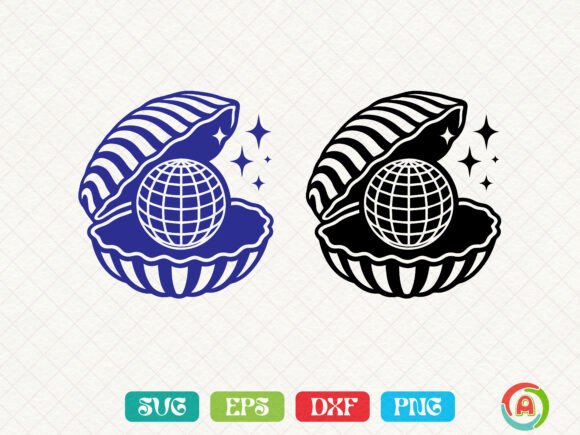
Retro Shell with Glitter Ball Review
As a designer who spends half my day staring at stitch charts and the other half troubleshooting tension issues on vintage machines, I don’t just look at an embroidery file; I look at how it will behave under the needle. When Retro Shell with Glitter Ball landed in my inbox, my first thought wasn’t about the aesthetic—it was about execution. Can this design actually hold up in a real-world commercial project? Is it going to snag on every sweater it touches, or does it offer that perfect balance of nostalgia and tactile interest?
I’ve tested this vector-based asset across several different mediums, from heavy cotton canvas to delicate jersey knits. Here is my practical breakdown of how Retro Shell with Glitter Ball performs when you move beyond the screen and into the hoop.
The First Impression: Nostalgia Meets Texture
The visual personality of Retro Shell with Glitter Ball is distinct. It doesn’t try to be minimalist, nor does it go overboard with chaotic patterns. Instead, it strikes a chord with that specific mid-century coastal vibe that has been dominating home decor and apparel trends for the last few years. The shell shape provides a clean, organic outline, while the glitter ball element introduces a focal point that demands attention.
From a design perspective, the layout is smart. The vector nature of the files means the curves are smooth, which is critical for satin stitches. If the underlying vector paths were jagged, the machine would have to compensate, leading to puckering or thread breaks. In this case, the scalability is impressive. Whether you are scaling this down for a baby onesie or blowing it up for a large wall hanging, the integrity of the line work remains sharp. This adaptability is exactly what small business owners need when they want to create a cohesive product line across different item types.
Real-World Application: Where Does It Shine?
I took Retro Shell with Glitter Ball out of the digital realm and put it through its paces on a few key projects. The most successful application was undoubtedly on a custom embroidered tote bag. Using a sturdy cotton duck canvas, the design popped. The contrast between the natural fabric and the vibrant thread colors (which are easily adaptable thanks to the vector format) created a high-end boutique feel. Customers at craft fairs gravitated toward these bags not just because of the image, but because the embroidery looked substantial and well-executed.
However, the versatility extends far beyond totes. I experimented with this design as an embroidered patch intended for denim jackets. The retro theme fits perfectly with vintage-wash denim, creating a look that feels intentional rather than slapped-on. For custom apparel, specifically sweatshirts, the design works beautifully as a chest-sized accent or a larger back print. The "glitter" aspect of the concept translates well into embroidery if you use metallic threads or textured fill stitches, adding a dimension that flat prints simply cannot replicate.
It also proved to be a strong contender for holiday embroidery. While shells might scream summer, the color palette can be tweaked to fit autumnal tones or even festive reds and greens for a quirky holiday gift. The vector files allow you to swap out colors instantly, making it easy to repurpose the same design assets for different seasons without needing to redraw anything.
Critical Considerations for Stitching Success
While the design is visually appealing, no machine embroidery design is without its challenges. There are specific scenarios where Retro Shell with Glitter Ball requires careful handling.
- Fabric Choice Matters: Avoid using this on highly textured fabrics like bouclé or loose-weave linen unless you are using a heavy-duty stabilizer. The needle penetration can cause distortion. Similarly, thin fabrics like silk chiffon are risky; the density of the shell outline may pull the fabric too tightly, resulting in a wavy finish.
- Stretchy Materials: If you are applying this to stretchy knit fabrics for baby embroidery or activewear, you must use a tear-away or cut-away stabilizer appropriately. Without proper support, the circular elements of the shell can distort into ovals during stitching.
- Small Hoop Sizes: Be cautious when scaling this down. If the design becomes too small, the details within the shell and the glitter ball may merge, losing their definition. Always inspect small details before committing to a final run.
- Curved Surfaces: Applying this to caps or hats can be tricky. The curvature of the front panel might cause the top of the shell to appear stretched. Test your hoop size and placement carefully to ensure the design sits naturally on the curve.
Technical Notes for the Discerning Designer
One of the strongest selling points of Retro Shell with Glitter Ball is the file variety. You receive a zip containing EPS, PNG, SVG, and DXF files. This is crucial for anyone running a craft business or operating as an Etsy seller.
The SVG and EPS files ensure that the design is purely vector-based, allowing for seamless scalability. This means you can adjust the thread colors digitally before sending the file to your embroidery machine, giving you full control over the final aesthetic. The DXF file is particularly useful if you plan to use cutting machines for applique bases, turning this into an effective applique design as well.
When preparing the file for stitching, pay close attention to the stitch density. The shell outline likely uses a combination of satin stitch and possibly some fill stitch for depth. Ensure your machine settings match the recommended density for your chosen thread weight. Using a heavier thread on a dense design can lead to needle breakage, while a lighter thread might not cover the fabric adequately.
Another pro-tip: test the design in black and white mockups. Sometimes, color vibrancy hides structural flaws. By viewing the design in grayscale, you can assess the balance of positive and negative space. For Retro Shell with Glitter Ball, the balance is good, but it’s always safer to verify before investing time and materials.
Final Verdict: A Versatile Asset for Serious Makers
Does Retro Shell with Glitter Ball deliver value? Absolutely. It is not just a pretty picture; it is a functional, scalable, and commercially viable design asset. It bridges the gap between hobbyist charm and professional polish.
For those looking to expand their inventory of handmade products, this design offers a low-risk, high-reward option. It appeals to a broad demographic, from beach lovers to vintage enthusiasts. The ability to adapt the color palette means you can keep your shop fresh without constantly searching for new designs.
Just remember: the quality of the final finished product depends largely on your preparation. Check your licensing terms if you intend to sell finished items. Confirm that the digital embroidery file allows for commercial use. Use the right stabilizer. And always, always do a test stitch on scrap fabric first.
If you follow these steps, Retro Shell with Glitter Ball will elevate your embroidery project from a simple craft to a standout piece of wearable art or home decor. It’s a solid addition to any designer’s library, offering both aesthetic appeal and practical utility.