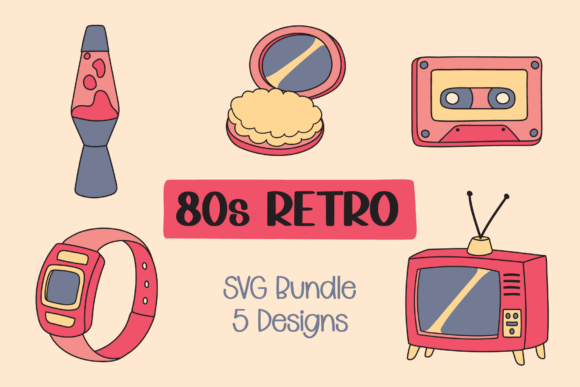
80s Retro Bundle Vol. 3: A Designer’s Review
As a designer who spends half my life staring at digitized files and the other half troubleshooting tension issues on the embroidery machine, I have learned to be skeptical of "vibes" without substance. When 80s Retro Bundle Vol. 3 landed in my inbox, I wasn't looking for just another nostalgic clipart pack. I was looking for something that could translate cleanly from screen to fabric, specifically for a batch of custom vintage-themed merch I was preparing for an upcoming craft fair. The description promises a quirky collection featuring five distinct icons—a lava lamp, compact mirror, cassette tape, digital watch, and vintage TV—and while that sounds simple enough, the devil is always in the stitching.
The First Impression: Nostalgia with Purpose
The moment I opened the design assets, the mood was immediately established. This isn't subtle, muted retro; it is loud, colorful, and unapologetically 1980s. For an embroidery project, this visual personality is a double-edged sword. On one hand, it grabs attention. On the other, it demands precision. The shapes are bold and recognizable, which is crucial when you are working with thread rather than pixels. Unlike vector graphics where you can rely on sharp anti-aliasing, embroidery relies on stitch density and color blocking to define form.
I found myself drawn to the variety within the bundle. It feels curated rather than random. The inclusion of items like the cassette tape and the vintage TV taps into a specific era of tactile technology that resonates deeply with current trends in handmade goods. However, as I zoomed in to inspect the details, my inner editor kicked in. Could these small icons hold up if stitched down? Would the fine lines of the digital watch display get lost in the fabric weave?
Real-World Application: From Screen to Stitch
To truly evaluate 80s Retro Bundle Vol. 3, I moved beyond the digital preview and started thinking about actual production scenarios. Let’s talk about the tote bag design potential first. These icons are perfect for a scattered placement or a single centered focal point on a canvas tote. Because the designs are relatively contained, they work beautifully as standalone motifs. I imagined printing a mockup of the lava lamp on a cream-colored cotton canvas. The contrast would be striking, provided the thread colors chosen were vibrant enough to pop against the natural fabric.
Then there is the apparel angle. This bundle screams sweatshirt embroidery. Think oversized, boxy tees or fleece crewnecks. The chunky nature of the 80s aesthetic pairs well with the softness of sweatshirt material. I also considered the embroidered patch market. These five icons are ideal candidates for iron-on patches sold separately or as part of a set. The compact mirror and digital watch, in particular, have that "sticker-like" quality that translates very well to satin-stitched borders.
However, not every application is created equal. I had to mentally test these designs against more challenging substrates. Imagine trying to embroider the digital watch onto a stretchy baseball cap. The curvature of the front panel combined with the potential for fabric shift during stitching could easily distort the rectangular shape of the watch face. In such cases, the design might lose its crispness, turning a sleek digital readout into a wobbly blob. This is why understanding the limitations of your hoop size and fabric stability is non-negotiable.
Technical Considerations for the Savvy Maker
If you are planning to use this machine embroidery design for commercial purposes, you need to look past the pretty colors and examine the construction. The first step is always to check the stitch density. Designs with high density can cause puckering, especially on lightweight fabrics like thin cotton or rayon blends. If the fill stitches are too tight, your finished product will look stiff and unnatural, detracting from the handmade product appeal that customers pay a premium for.
I also recommend testing the thread colors before committing to a full run. The original graphic likely uses bright neons or deep purples, but thread manufacturers vary wildly in their color matching. A neon yellow in one brand might look like pale butter in another. Always do a test stitch on scrap fabric that matches the texture and weight of your final garment. This helps you assess how the fabric texture interacts with the thread. On a rough burlap, fine details might disappear, whereas on smooth linen, they should shine.
Another critical factor is the use of stabilizer. For intricate elements like the teeth on the cassette tape or the buttons on the vintage TV, a cut-away stabilizer is often safer than a tear-away, especially if the item will undergo frequent washing. If you are making custom apparel intended for daily wear, durability matters. A design that looks great on day one but unravels after three washes will hurt your reputation as an Etsy seller or small business owner.
Where to Exercise Caution
While 80s Retro Bundle Vol. 3 is versatile, there are specific areas where you should proceed with caution:
- Small Hoop Sizes: Trying to fit all five icons into a tiny hoop might force you to scale them down so much that the detail becomes indistinguishable. Stick to larger hoops for better clarity.
- Textured Fabrics: Avoid bouclé wool or heavy corduroy. The uneven surface can cause needle deflection, leading to misaligned stitches, particularly in the satin stitch edges.
- Dense Stitch Areas: If the design includes large blocks of fill stitch, ensure your machine handles the thickness well. Too many layers of thread can lead to breakage or birdnesting.
- Curved Surfaces: As mentioned, caps and curved pillow corners require careful hooping techniques to prevent distortion.
Impact on Brand and Customer Trust
Using a well-executed design like this does more than just decorate a product; it communicates professionalism. When a customer sees clean running stitch lines and consistent stitch density, they subconsciously trust the quality of the entire item. A sloppy execution of a cute design can make even a high-quality garment feel cheap. Conversely, a precise rendition of the vintage TV icon elevates the perceived value of the piece.
This bundle also supports brand consistency. If you are building a shop around a retro or nostalgia theme, having a cohesive set of designs allows you to create coordinated collections. You can mix and match the lava lamp with the compact mirror for a "Get Ready With Me" themed gift set, or pair the cassette tape with the digital watch for a "Time Traveler" collection. This strategic grouping enhances buyer engagement and encourages multiple purchases.
Final Verdict
80s Retro Bundle Vol. 3 is a solid addition to any designer's library, provided you approach it with technical diligence. It captures the essence of the era without being overly complex, making it accessible for both hobbyists and seasoned professionals. The key to success lies in preparation: test your fabrics, verify your stabilizers, and choose your threads wisely. By doing so, you transform a simple digital file into a tangible, desirable finished product that stands out in a crowded marketplace.
Remember to always review the licensing terms before selling commercial embroidery items. Ensure you have the right to sell physical goods made from these files, and consider creating unique printable mockups to showcase your skills online. With the right care, these five icons can become staples in your craft business, bringing a touch of retro charm to everything from personalized gifts to boutique design assets.